

In a landmark move for the automotive supply chain, three leading industry giants have forged a strategic collaborative alliance, establishing an integrated "Material-Equipment-Mold Iron Triangle" . This partnership aims to tackle one of the sector's most persistent challenges: the lengthy and costly development cycle for new automotive components .
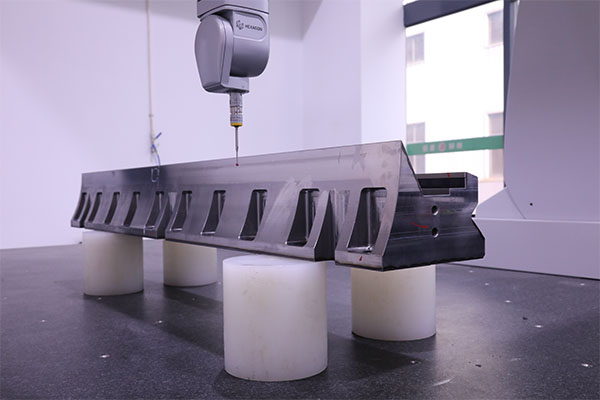
The alliance uniquely combines expertise from three fundamental pillars of manufacturing:
-
Advanced Materials Specialist: Providing next-generation alloys, composites, and polymers tailored for automotive applications.
-
Precision Equipment Manufacturer: Supplying state-of-the-art processing machinery, including CNC systems and additive manufacturing units.
-
High-Performance Mold Developer: Creating sophisticated die-casting, injection molding, and stamping模具 optimized for new materials and equipment.
Traditionally, material selection, machinery programming, and模具 design have operated in sequential, often siloed, stages, leading to inefficiencies and repeated iterations . This new "iron triangle" model promotes concurrent engineering, where all three parties collaborate from the earliest concept phase. This integration is designed to preempt compatibility issues, optimize manufacturing parameters upfront, and streamline the entire workflow from design to试生产 (trial production) .
Industry analysts project that this deep, three-way integration could reduce development timelines for complex parts by 30% to 50% . The model is particularly impactful for components critical to vehicle electrification and lightweighting, such as integrated battery housings,大型一体化压铸件 (large-scale integrated die castings), and advanced structural parts .
This initiative represents a significant evolution in collaborative manufacturing, moving beyond simple buyer-supplier relationships towards a co-creation ecosystem . It aligns with the automotive industry's urgent need for agility and innovation in the face of rapid technological shifts. By breaking down traditional barriers between material science, equipment engineering, and tooling design, the alliance sets a new benchmark for how future automotive components might be developed at unprecedented speed .
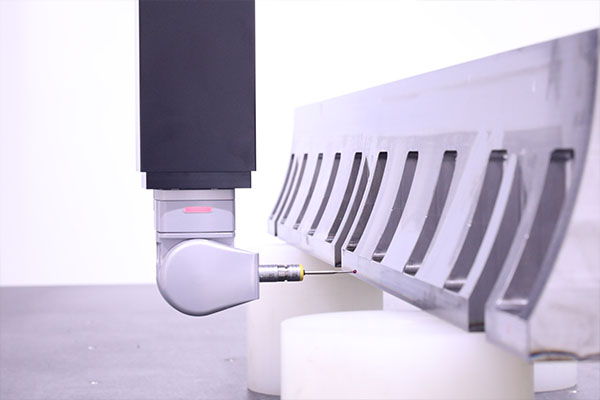
The first joint projects are expected to focus on electric vehicle platforms and next-generation interior systems, with the results closely watched by global OEMs seeking to accelerate their own time-to-market .